



Soak off vs file off: to remove an acrylic extension, first take off any bling and cut the length down, then either file the product away with an e-file and hand files, or wrap each nail in foil with an acetone-soaked pad and scrape the softened acrylic off. Kirsty from Naio Nails shows both methods side by side on the same hands.
Filing is quicker for the tech, while soaking cuts down the filing on the natural nail, and Kirsty prefers clients to soak off. Below are the products, every step with links into the video, the tips that protect the natural nail and answers to common questions about acrylic removal.
At a Glance
- Treatment: removing acrylic extensions by soaking off and filing off
- Artist: Kirsty
- Technique: e-file and hand file removal compared with foil-wrapped acetone soak
- Key products: Pure Acetone, 3 Way Buffer, Gel Residue Remover, Cuticle Oil 15ml
- Video length: about 19 minutes 13 seconds
Why You'll Love This Acrylic Removal Tutorial
- Both methods shown side by side.
- Clear tips to protect the natural nail.
- Helps you choose the right method for each client.
- Covers removing bling and cutting length safely first.
Soak Off vs File Off: Which Is Better?
Filing off uses an e-file and hand files to remove the product layer by layer. It is quicker for the technician, but every pass is close to the natural nail, so heat and over-filing are the risks.
Soaking off uses acetone to soften acrylic so it can be scraped away. In the video, foil keeps the heat and acetone against the nail, and soaking first means far less filing afterwards. Kirsty prefers her clients to soak off, but notes hard gel cannot be soaked and always has to be filed. Weighing soak off vs file off comes down to time, the product and the natural nail underneath.
Products Used in This Video


- 3 Way Buffer: buffs the nail after filing
- Pure Acetone: the soak
- Gel Residue Remover: wipes the nail at the end
- Cuticle Oil 15ml: to finish
- Nippers, an e-file with a serrated bit and a medium bit, a hand file in 180 and 240 grit, foil and lint-free pads and an orange wood stick
How to Remove an Acrylic Extension
1. Remove the bling
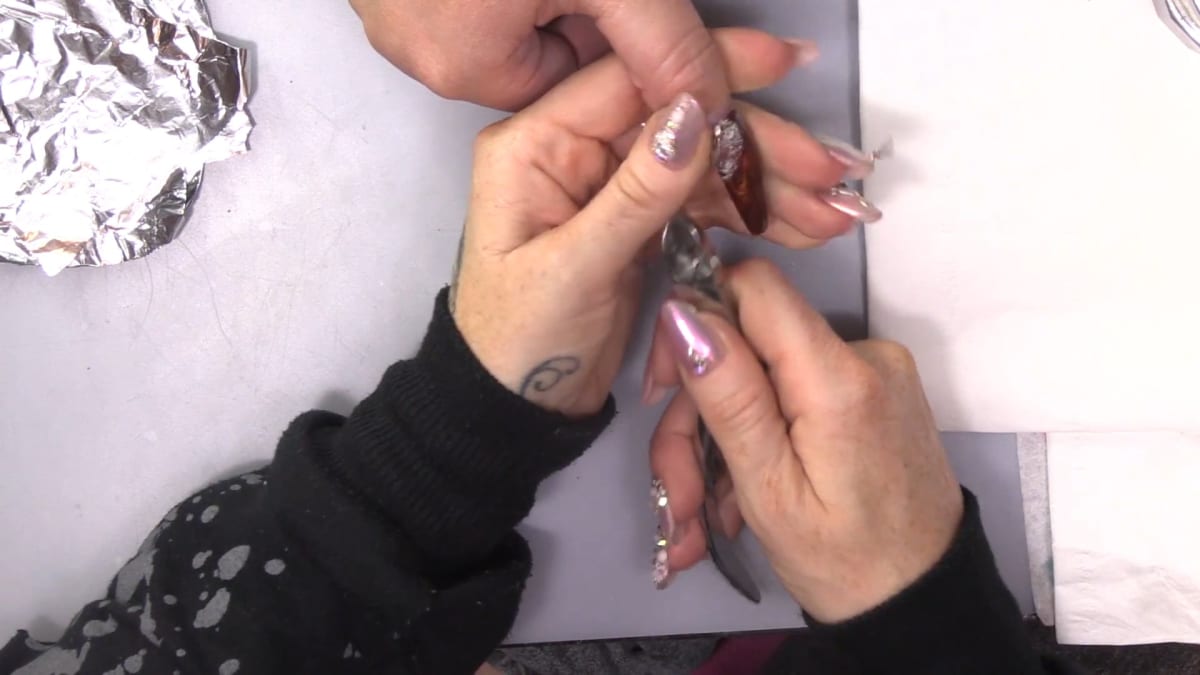
Support the hand, break the gel seal under the edges with nippers and remove the micro balls. Watch this step at 0:30
2. Cut the length down
Cut the length down, taking care around the hyponychium, the skin under the free edge. Watch this step at 3:30
3. Method one: file off
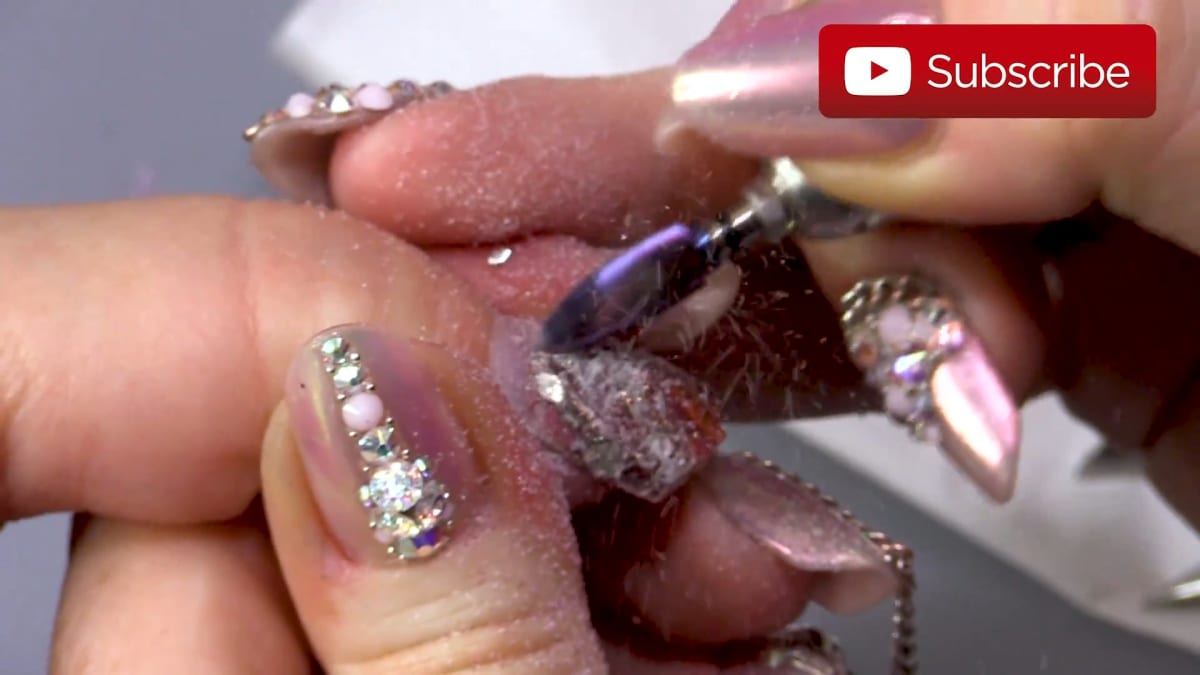
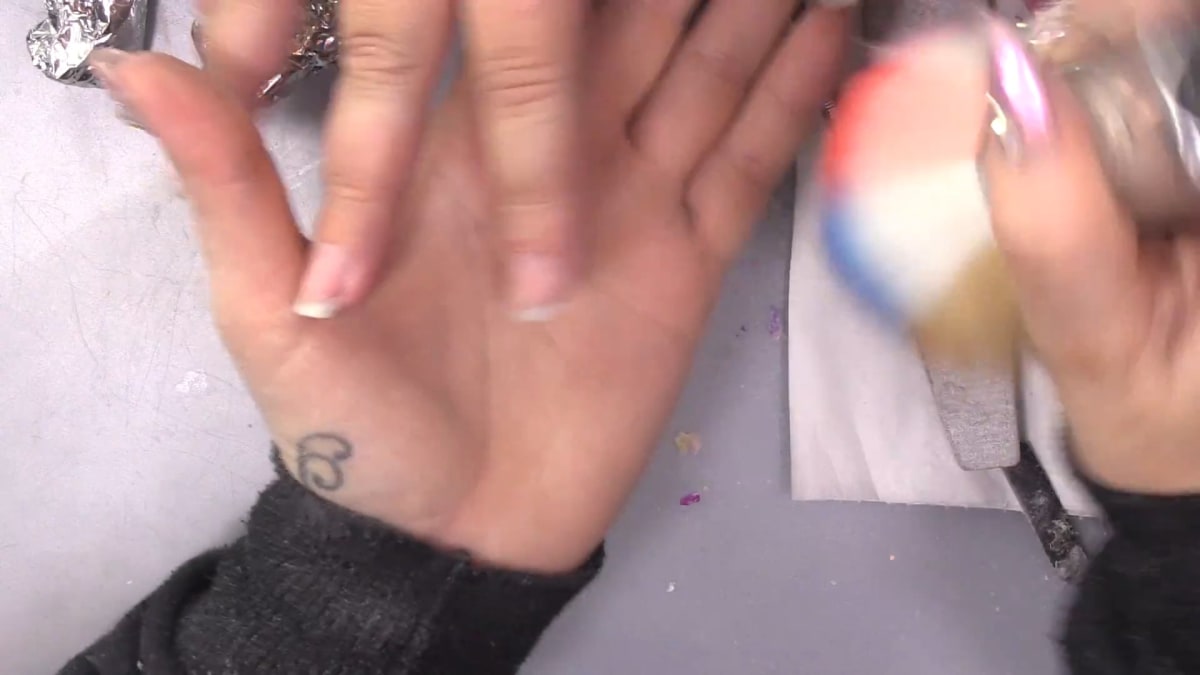
Remove the bulk with the e-file and a serrated bit, then move to a medium bit, keeping it moving to avoid heat. Finish with a hand file, 180 grit and then 240 grit near the nail, and buff with the 3 Way Buffer. Watch this step at 5:00
4. Method two: soak off
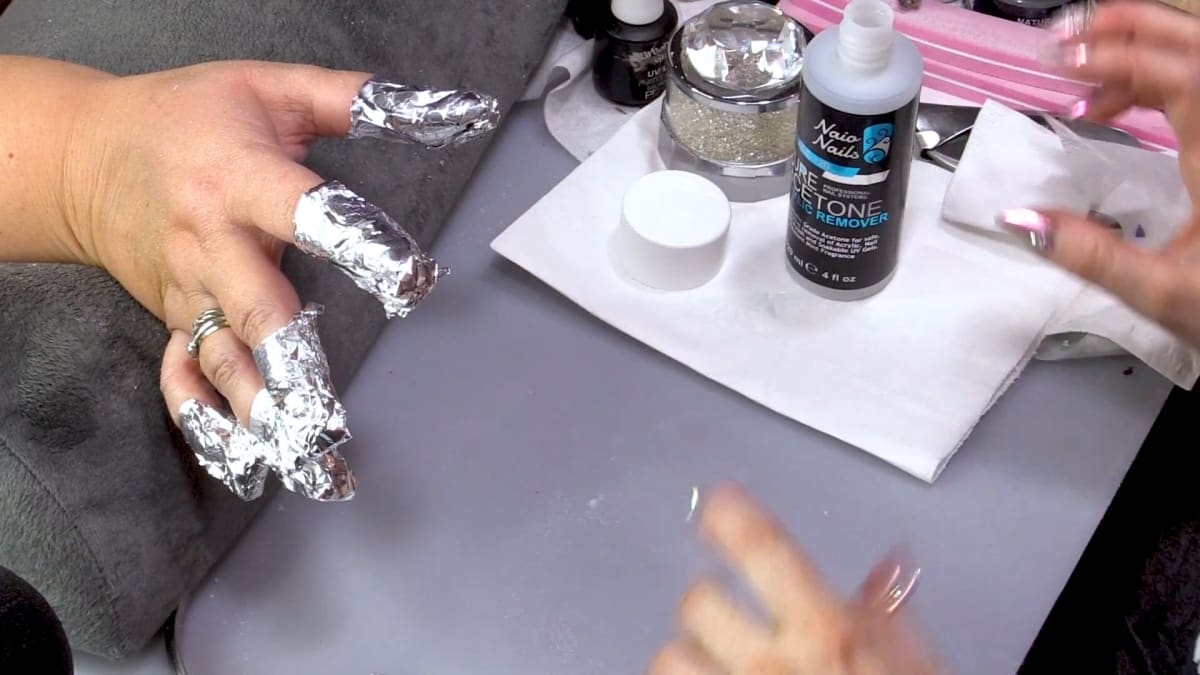
Wrap each nail in foil with a lint-free pad saturated in Pure Acetone, so the heat stays in. Scrape the softened product with an orange wood stick, file the spongy layer and re-soak if needed. The thumb takes longer, about 5 more minutes. Watch this step at 10:00

5. Finish
Wipe with Gel Residue Remover and apply Cuticle Oil. Watch this step at 17:00
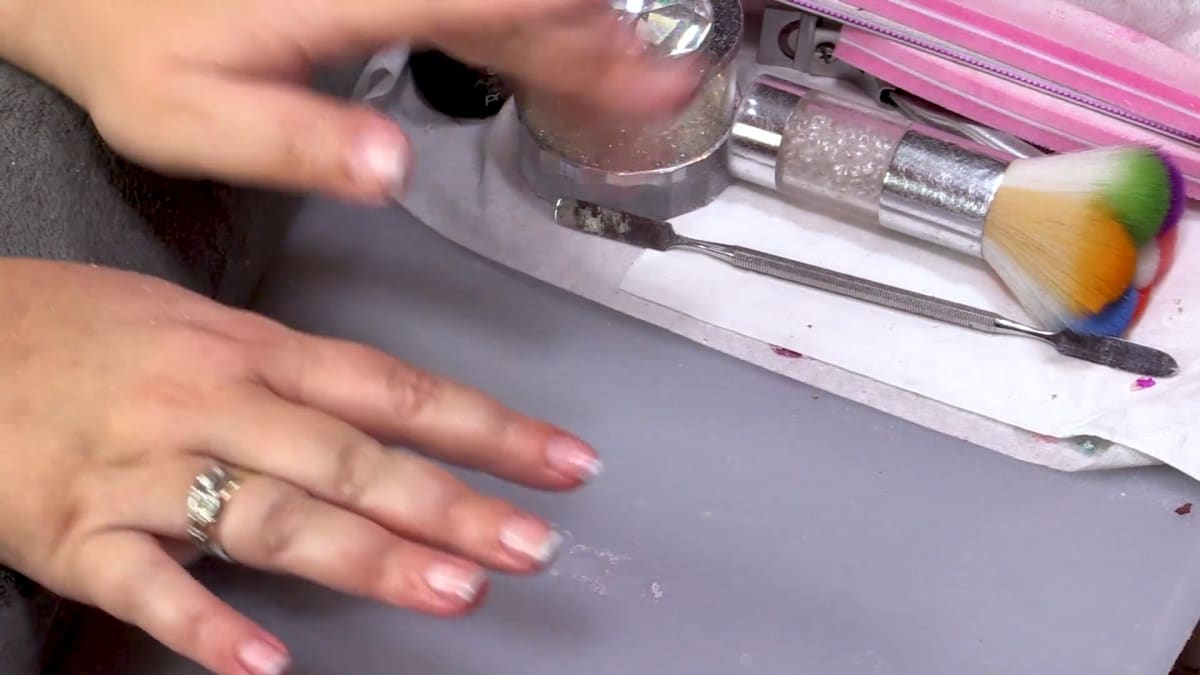
Where to find each stage of the Soak Off vs File Off video
| Stage | Time |
|---|---|
| Removing the bling | 0:30 |
| Cutting the length | 3:30 |
| Filing off | 5:00 |
| Soaking off | 10:00 |
| Finishing | 17:00 |
Pro Tips
- Soaking cuts down the filing.
- Keep the e-file moving to avoid heat.
- Hard gel needs filing; it cannot be soaked.
- Give the thumb about 5 extra minutes to soak.
Common Mistakes and How to Fix Them
- Holding the e-file still: it causes heat. Keep the bit moving across the nail.
- Rushing the thumb: it needs longer to soak than the other fingers.
- Forcing product off: re-soak until it is soft enough to scrape away.
Who Is This Design For?
This tutorial is for nail techs and clients removing acrylic. Seeing soak off vs file off side by side makes it easier to choose the gentler or faster option for each appointment.
Ways to Make It Your Own
- Soak off for the gentlest removal.
- File off in the salon when speed matters.
- Combine both: soak first, then a light file.
Aftercare
Moisturise the nails and skin with cuticle oil after removal, as acetone is drying.
Frequently Asked Questions
Is it better to soak off or file off acrylic?
Filing is quicker for the tech, while soaking cuts down the filing. Kirsty prefers clients to soak off.
How do you soak off acrylic nails?
Wrap each nail in foil with a lint-free pad saturated in Pure Acetone, then scrape the softened product with an orange wood stick, file the spongy layer and re-soak if needed.
Why wrap the nails in foil?
So the heat stays in while the acetone works.
Can hard gel be soaked off?
No. Hard gel needs filing.
Which grit should I use near the natural nail?
Kirsty uses 180 grit, then 240 grit closer to the nail, before buffing.
Why does the thumb take longer?
It needs about 5 more minutes to soak than the other fingers.
Give Soaking Off a Try
Watch the video above with Kirsty and decide whether soak off or file off suits you and your clients.


